Working Together for Healthy Soil
The municipality of Leudal, together with three dairy farmers, is participating in a study into the use of leaves and roadside cuttings in agriculture. This study runs until the end of 2027 and is funded by the Province of Limburg. The goal? To keep the soil healthy or improve it using natural, local materials.
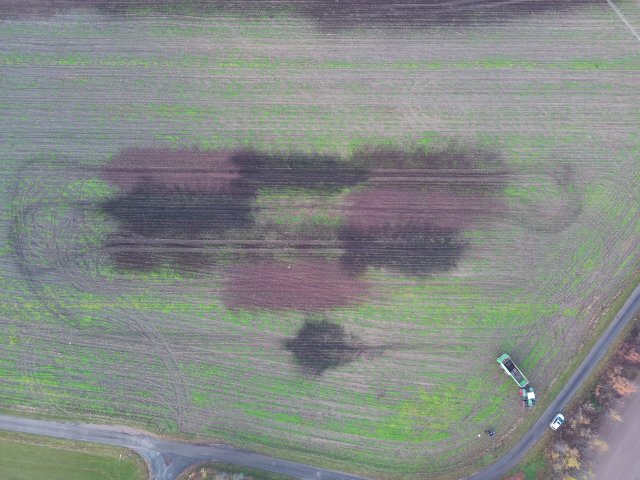
Photo: Front view of a contractor spreading leaf material. Two other research plots are visible in the background.
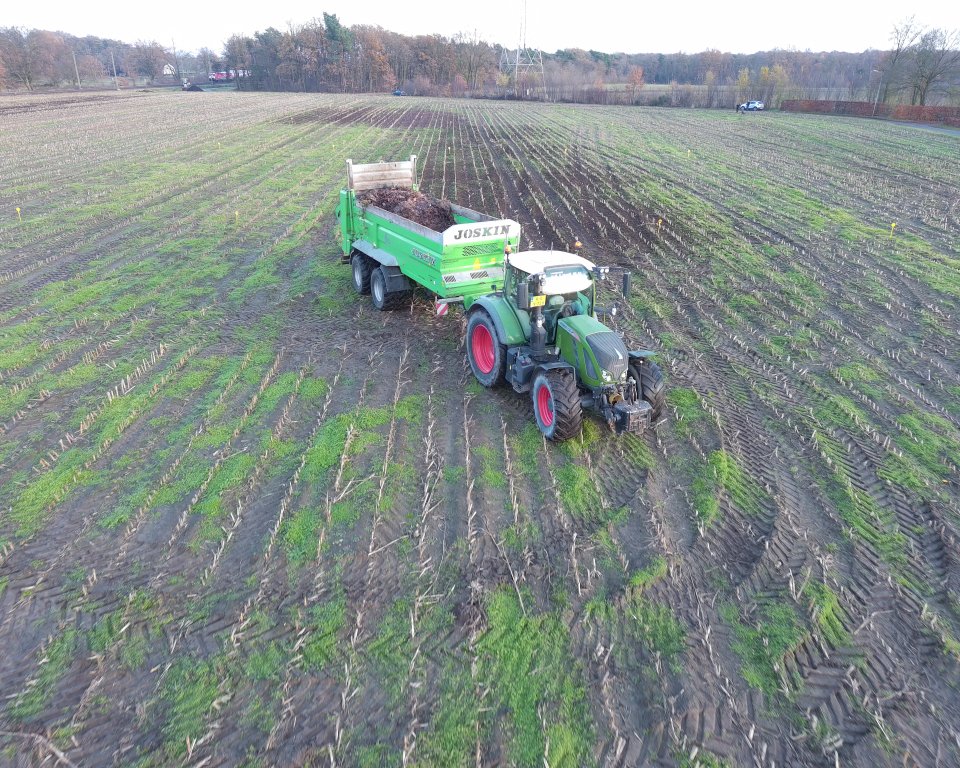
Leaves and roadside clippings are generated during the maintenance of greenery and verges. Normally, this is removed and processed into compost or burned for biogas production. This study investigates whether this material can also be used directly and locally on agricultural land. It also examines the differences in quality and application compared to compost versus not using organic material on the arable land.
This can have advantages:
- it is more affordable for farmers;
- it helps to keep the soil healthy or to improve it;
- It fits within a sustainable loop close to home.
Where does this take place?
The research is being conducted on agricultural land belonging to three dairy farmers within the municipality of Leudal, namely in the villages: Neer , Baexem and Buggenum. The exact locations are not being shared publicly because they involve private land.
Why is this important?
Leaves and grass clippings contain valuable substances that are good for the soil. Think of organic matter and nutrients. By using these locally:
- the soil remains fertile;
- can water be retained or infiltrate better;
- we feed the soil life.
Careful approach
The study also examines key areas of focus, such as:
- preventing pollution (for example plastic);
- risk of spread of invasive alien species (such as Japanese knotweed)
- the right moment of use on the land;
- and what is and isn't allowed according to the rules.
Want to know more?
This is being carefully investigated in collaboration with, among others, the HAS Green Academy, farmers, the Water Board, Waste Cooperation Limburg, and the Province of Limburg. More information about the research can be found on the HAS Green Academy website: www.has.nl/onderzoek/onderzoeksprojecten/bodem-vitalisering-limburg/