An additional high-voltage line between Maasbracht and Eindhoven
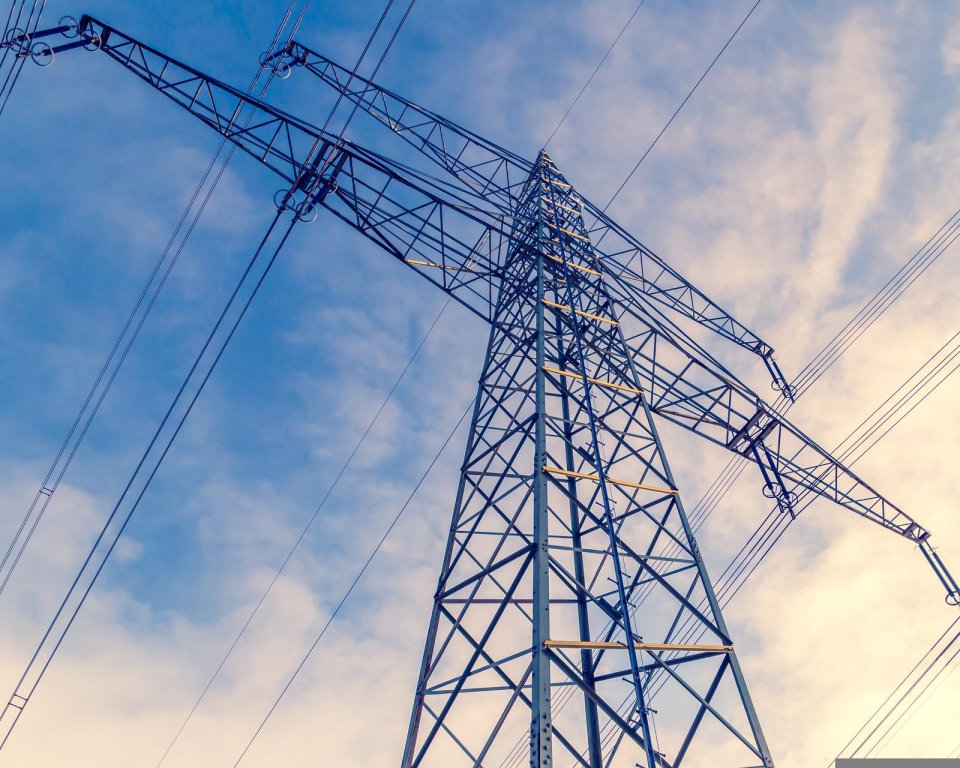
TenneT, the operator of the national high-voltage grid, has calculated that an additional high-voltage line will be needed here starting in 2030. Because the use of the national high-voltage grid is increasing. This is because of this:
- Demand and supply of electricity is increasing. This is due to population growth. And we are using more power with electric cars, homes and industry, for example.
- Much power will soon be generated by wind turbines at sea, rather than at a power plant on land. As a result, the power will have to travel a longer path to the user. This places greater demands on the high-voltage grid.
- Sun and wind sometimes give too much power and sometimes too little. When there is too much power, it is transported abroad. When there is a shortage, power is imported. That too requires more of the high-voltage grid.
Where will the additional high voltage line be located?
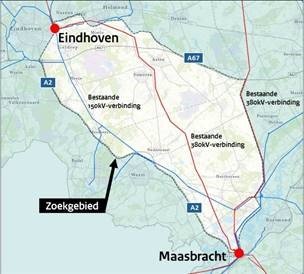
There is a large search area between the Maasbracht and Eindhoven high-voltage substations. This is where the high-voltage line is to be located. The new line should not be much longer than the existing one. Otherwise it won't work.
Within the search area, TenneT is looking at this:
- The connection will be above ground (except where there is really no other way)
- The connection will be as close as possible to sensitive buildings or town and village centers
- The connection will be as close as possible to protected natural areas
- The connection crosses as few other high-voltage lines as possible
- The joint will have as few bends or kinks as possible
- The connection preferably runs flush with existing infrastructure, such as a highway or other high-voltage line
What happens next?
A Proposal and Participation Plan are available for review. This is the first step in the procedure that ultimately ensures that all permits are in place for construction. The Intention describes TenneT's plans for the project. The Participation Plan describes how the surrounding area will be involved in the energy project. You can now share your suggestions, opportunities and concerns. These will be taken to the next step. Several more steps will follow, in which the plan will become more and more precise. This is how the Ministry of Climate and Green Growth and TenneT ensure that the high-voltage line is carefully fitted in. At the various steps, you will be given the opportunity to respond again and again.
Want to know more? Watch the webinars.
- The October 17 webinar can be viewed again via: 380 kV Grid Expansion Maasbracht - Eindhoven (rvo.nl)
You can also find an overview of the questions and answers here. - The June webinar can be watched back at: https://www.tennet.eu/nl/projectnieuws/terugkijken-webinar
You can also find a summary of the questions and answers here.
More information
- You can read more about the information meetings, the steps in the process and how to respond on the RFO website: https://www.rvo.nl/onderwerpen/bureau-energieprojecten/lopende-projecten/380-kv-netuitbreiding-me.
- More information about the project itself can be found on this website: https://www.tennet.eu/nl/projecten/provincies/limburg/netuitbreiding-maasbracht-eindhoven.
Stay involved
Your input counts. Whether you have attended a meeting before, or just recently joined - we cordially invite you to share your Health or question with us. You can do so via:
- The Project Viewer
- Our email address: maasbrachteindhoven@tennet.eu
How does the process continue now?
All comments received are now being compiled and answered in a so-called "Reaction Memorandum. We are also receiving advice from the independent Commission for Environmental Impact Assessment (Commission MER). This is an independent organization that advises us on the content and quality of the environmental impact report that has yet to be drawn up. This will ensure that the environmental consequences of projects are properly taken into account in decision-making.
We will use the responses together with the advice of the EIA Committee to finalize the research approach as described in the draft NRD. We will then inform you of the final NRD at the end of 2025. The environmental impact report will be ready in 2027, followed by the choice of the so-called 'preferred alternative' - the proposal for the route. The plan for the preferred alternative (draft preference decision) will then be submitted for public inspection together with the environmental impact report, where everyone will have the opportunity to submit their views. We will also organize walk-in meetings and a webinar.
What does this mean for you?
- Your submitted concerns and ideas will be considered in both the preparation of the response memo and in the decision-making process when a final NRD is adopted.
- You will have another opportunity to comment on the results once the EIR is complete and the preferred alternative is known.
- Thanks to the participation plan, there is room for further input at every stage - even for those just getting in now.
View the Project Viewer
We mention it in every newsletter: the Project Viewer for this project on the TenneT website. This is an online, interactive Map shows you how the search area is divided and which routes we are now investigating further. You can also use the Project Viewer Health a Health or ask a question. We will then endeavor to respond within 10 working days.
View the Project Viewer on the TenneT website here.