
Villages
The municipality of Leudal consists of 16 villages/residential areas: Baexem, Buggenum, Ell, Grathem, Haelen, Haler, Heibloem, Heythuysen, Horn, Hunsel, Ittervoort, Kelpen-Oler, Neer, Neeritter, Nunhem and Roggel.

Baexem
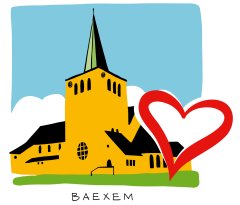
Baexem is an attractive residential center due to its location close to Roermond and its location on the provincial road Weert-Roermond. Baexem preserves valuable memories of its rich past, such as castle den Baexem, Huize de Brias, the monastery Mariabosch, the former monastery Exaeten (currently used as an asylum seekers' center) and the standard mill Aurora.
For more information: www.hartvoorbaexem.nl
Buggenum
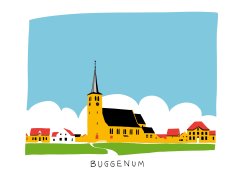
Characteristic of Buggenum is the beautiful buildings along the Dorpsstraat, including the St. Aldegundiskerk with its beautiful interior and Huis Malborgh. The writer Neel Doff was born in Buggenum in 1858.
For more information: www.dorpsraadbuggenum.nl
Ell
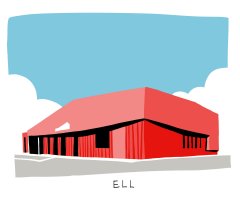
Like Ittervoort, the village of Ell used to be part of Thorn. Some remains of the medieval church have been incorporated into the current church.
To the west of Ell lies the Heijkersbroek nature reserve, situated along the Tungelroyse Beek and the Ellerheide.
For more information: www.dorpsraadell.nl
Grathem
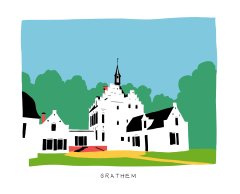
In the residential center of Grathem there is a monumental church with a late Romanesque marlstone tower from the 13th century. The old core of Grathem is particularly beautiful and is therefore characterized as the "pearl" of the municipality. The restored water mill is well worth a visit. In addition, there are 2 castles in Grathem, castle Ten Hove and castle Groot Buggenum.
For more information: www.dorpsraadgrathem.nl
Haelen
In Haelen is Aldenghoor Castle; this is a medieval castle. The main building from the 17th century has 2 wings with wolf roofs. At the inner corner is a black round tower from 15th or 16th century made of brick and marl. On the Roggelseweg is the Monument of Tolerance. This Monument was erected in memory of the war years 1940-1945 and of the 687 soldiers of 11 nationalities who lost their lives in the Leudal area.
For more information: www.dorpsraadhaelen.nl
Haler
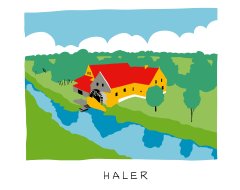
The village of Haler is surrounded by an attractive cultural landscape. A special feature is the ancient ash landscape. Just outside Haler is the Uffelse watermill. Haler is extremely suitable for people looking for tranquility, nature and beautiful monuments.
Heibloem
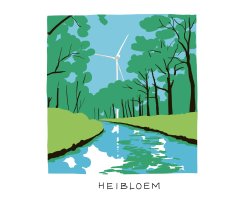
At the edge of the municipality of Leudal lies Heibloem: small on the Map, but big in connectedness. In the elementary school you feel the warmth of a community where every child counts and young and old play, learn and care for each other together. Children who do not fit into regular education find their place at the Aloysius Foundation. Schools and associations form the cement of the village. Heibloem is taking steps forward in sustainability, with green gas, solar energy, windmills and a 100% electric citizen bus that leaves no one by the wayside.
For more information: www.heibloem.nu
Heythuysen
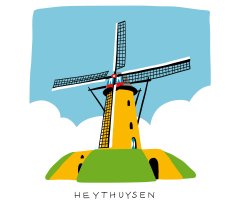
The center of Heythuysen is the largest center in the municipality of Leudal. The shopping center offers a wide range of shops and ample parking. Heythuysen also has a lot to offer nature lovers. In the immediate vicinity are beautiful nature reserves, such as the Leudal between Heythuysen and Neer the deciduous and coniferous forests along the Leu and Zelsterbeek streams. The Beylshof is a nature reserve south of Heythuysen on the Tungelroyse stream. North of the town center are the Heibloem forests and the nature reserves in the Caluna area. Heythuysen also has a number of attractions, such as the Sint Antoniusmolen windmill, the mission chapel, and the In 't Vergulde Hirt gallery.
For more information: www.dorpsraadheythuysen.nl

Horn
Horn Castle, with its oval-shaped castle wall, dates primarily from the 15th and 16th centuries, but also features remnants from the 14th century. This ancestral home of the Lords of Horn is well maintained. A beautiful walking park surrounds the castle. In addition, Horn is home to two windmills, De Hoop and De Welvaart, which operate at regular intervals.
For more information: www.haor.nl/dorpsoverleg
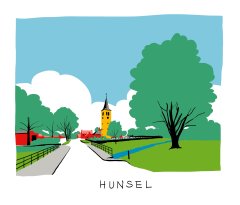
Hunsel
The core of Hunsel used to belong to the country of Kessenich (Belgium). There are still some old farms and chapels here. The partly 1839 Jacobus Church was built on the foundations of the medieval church. A little further on, the Uffelse stream flows. Characteristic of the landscape around Hunsel are the higher sandy soils with wooded banks.
For more information: www.hunsel.nl
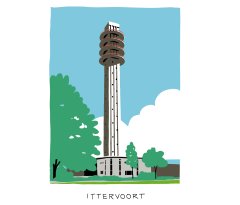
Ittervoort
Ittervoort once belonged to the Principality of Thorn and is located where the Itterbeek flows into the “Het Vijverbroek” nature reserve. The Roman road from Tongeren to Nijmegen used to cross the Itterbeek here via a ford. On the opposite side of the Napoleonsweg stands the 19th-century parish church. Between Neeritter and Ittervoort lies a watermill, the Schouwsmolen.
For more information: https://www.oetittervoort.nl
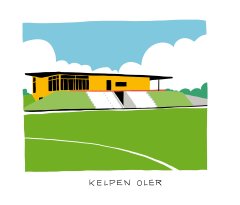
Kelpen-Oler
Kelpen-Oler is a small nucleus. The parish church was built in 1935 to a design by J.Th.J. Cuypers and P. Cuypers junior of Roermond. The church in the middle between Kelpen and Oler was the beginning of the formation of the joint residential nucleus Kelpen-Oler. Kelpen and Oler are first mentioned in 1329. However, some soil finds indicate that this area was already inhabited in prehistoric times as well. The Keversbroek is a beautiful nature reserve near Kelpen-Oler. On the outskirts of this residential area is the Kelperheide business park.
For more information: www.dorpsraadkelpen-oler.nl
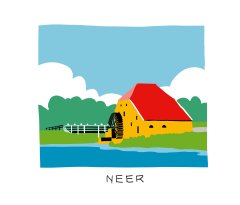
Neer
The village Neer a few tourist gems, such as the beer brewery, the Keizerbosch monastery, and the old Friedesse watermill in the center of the village. A visit to the historic village center with its imposing church and beautiful historic buildings and facades is highly recommended. In the vicinity of the village, you can enjoy beautiful views of the Meuse and the Neerbeek with its fish ladders. Neer is also Neer for its wind farm on the outskirts of the village.
For more information: https://gaernaonaer.nl/
Neeritter
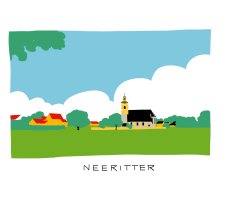
Neeritter used to be a seigniory on the Itterbeek and was completely walled in. Only a few remnants of this walling are still visible. Around the central Frankish square you will find monumental houses and farms, including the 15th century guest house. The Saint Lambert Church consists of a 13th century tower crowned with the so-called Peperbus. A short distance from the village center is the Itterse Heide, a landscape of forest plots, wooded banks and fields.
For more information: www.itterlaeftj.nl
Nunhem
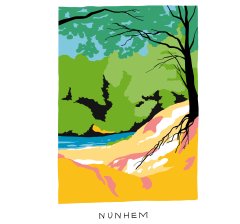
The hospitable village of Nunhem is surrounded by the beautiful Leudal area and by the river Maas. After a walking or cycling tour through the Leudal you can relax on a terrace in Nunhem. On your way back you can take in the farmstead Huize Nunhem, which dates back to 1719. The monumental Saint Servatius Church is also well worth a visit.
For more information: www.dorpsraadnunhem.nl
Roggel
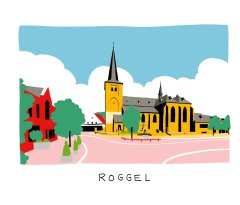
Hospitable and active Roggel is known as an attractive village where there is always something to do. There is a large recreation park with swimming pool, playground, camping and riding stables. A busy market is held several times a year. Outside the village is the Sint Petrusmolen from 1866.
For more information: https://www.roggelsketeerke.nl/dorpsraad-roggel/
Are you curious about what's happening in Leudal? Then take a look at the events calendar