
300 million for De Peel: Launch of Measures to Streamline the Permit Issuance Process
On June 17, 2026, 22 government agencies signed the cooperation agreement for NOVEX De Peel. The government is investing 300 million euros in the region for this purpose.
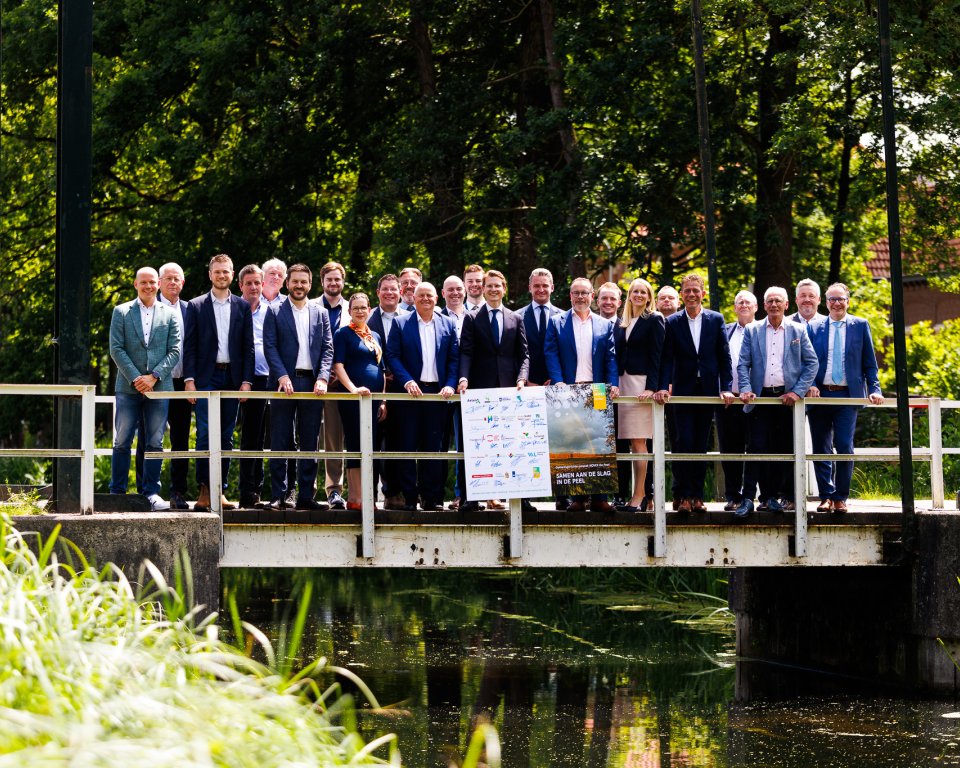
The investment will enable the implementation of measures that accelerate nature restoration, combat drought, and reduce nitrogen pressure on vulnerable natural areas. The funds will be used for five sets of measures centered on the Natura 2000 areas of Deurnsche Peel & Mariapeel (including De Bult), Groote Peel, Sarsven, and De Banen. With the signing of the agreement, the focus shifts from planning to implementation, and the initiative in the area can finally get underway.
The shovel goes into the ground
By signing this agreement, 17 municipalities, 2 provinces, 2 water boards, and the national government are giving the green light to an implementation program that will accelerate nature restoration, combat land degradation, and reduce nitrogen emissions in the coming years. The measures are intended not only to strengthen nature but also to create room again for permitting and new developments in the region. This marks the next step toward a Peel region where nature, the economy, and quality of life are in balance.
Minister of LVVN, Jaimi van Essen:
Today, we’re taking an important step from planning to implementation. The challenges in De Peel are significant and place high demands on farmers, business owners, and residents. That is precisely why it is important that we support them through the necessary changes. A portion of the 300 million euros is available for tailored solutions for farmers. In addition, we are exploring how we can allocate additional resources to mitigate the socioeconomic impacts in the region. In this way, we are working together to build a future-proof De Peel.
Mario Jacobs (Dijkgraaf of the Aa and Maas Water Board and chair of NOVEX De Peel):
With this implementation plan and the associated agreements, NOVEX De Peel aims to bring the permitting process a significant step closer to completion. At the same time, there is still much work to be done. Only by working together and joining forces can we move forward with implementation and truly help the people who live and work in the area. The challenges in De Peel are extensive and intertwined. This requires not only close cooperation but also ongoing attention to the area’s socioeconomic development. Together, we are therefore building a diverse and vibrant Peel—a place where nature, water, quality of life, and the economy are in balance; where farmers and other entrepreneurs can earn a decent living; where there is room for new economic activity; and where life is enjoyable in both the towns and villages.
Where does the money go?
The 300 million will be used to fund measures that restore nature and water systems, support farmers in becoming more sustainable and transitioning to new practices, provide opportunities for voluntary relocation or closure of farms, and enable tailored solutions for entrepreneurs in the area.
150 million euros will go to the province of Limburg, which will use the funds for:
- Meijels Agricultural Outlook (Limburg side of the Groote Peel)
- Shared Peel (Limburg side of Deurnsche Peel & Mariapeel)
- Sarsven and De Banen.
150 million will go to the province of North Brabant, which will use the funds for:
- The Vitale Peel (the Brabant side of the Groote Peel, Deurnsche Peel, and Mariapeel)
- De Bult (part of Deurnsche Peel & Mariapeel).
Meijels Agricultural Outlook
The Meijels Agricultural Perspective focuses on reducing the sharp fluctuations in groundwater levels around the Groote Peel. These fluctuations pose a problem for the restoration of the fragile raised bogs and present challenges for agriculture, such as drought, flooding, uncertainty regarding irrigation, and the question of how extensification can remain practically feasible.
Shared Peel
Three challenges converge in the Gedeelde Peel: nature restoration, sustainable energy generation, and recreation. Water levels here drop in the summer, causing raised bogs and other water-dependent habitats to slowly disappear. That is why efforts are underway to find ways to better retain water. At the same time, the Gedeelde Peel has been designated as a potential site for large-scale solar energy generation. The process has involved identifying the best location to ensure that the project also contributes to nature restoration. New opportunities for recreation and the agricultural sector are also being explored to ensure the area remains vibrant and attractive.
Sarsven and the Jobs
Sarsven en de Banen is a valuable nature reserve with unique plants, animals, and landscapes that depend on an adequate supply of clean water and a healthy groundwater system. Factors such as drought, excess nitrogen, and changes in the surrounding environment are putting pressure on the natural ecosystem here. By working together on ecosystem restoration, we can ensure that this unique area is preserved and, in the long term, create the conditions necessary to grant permits for social and economic developments in this region.
Vitale Peel
In GGA Vitale Peel, government agencies, business owners, and residents are working together to find solutions that will keep the rural area strong and livable. In the area surrounding the Deurnsche Peel and Groote Peel Natura 2000 sites, the challenges related to agriculture, water, nature, recreation, and quality of life call for a cohesive, long-term approach. Developing a plan for the area’s layout and supporting individual entrepreneurs with their future plans go hand in hand. Various results have already been achieved, and the new funding will soon enable further steps to be taken.
De Bult
The natural environment in De Bult, including raised bogs and heathland, Health to continue developing in the right direction: nitrogen deposition there is too high, and the area is too dry for sustainable raised bog restoration and development. The restoration of the raised bogs in De Bult requires a higher and more stable groundwater level. Using the new water model for De Peel, we are now exploring various possible hydrological measures. Together with local businesses, we are seeking effective solutions.